Lights Down, Fangs Out: African Genre Cinema Deserves Cambridge’s Late Slot
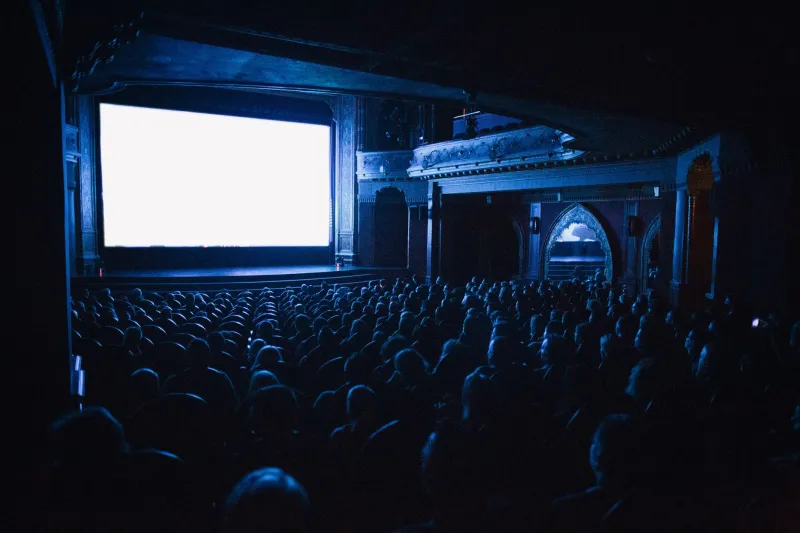
Walk past the Arts Picturehouse on a Friday night and you will see the usual Cambridge queue: couples, students, someone carrying a bike helmet. The screen behind them might be showing a horror double bill, a cult restoration, a new thriller. What it is less likely to be showing is an African film. And if it is, the chances are it started at 6pm, came with a panel, and was described in the brochure as urgent.
That is not a knock on urgency. Some of the best African films of the past decade are urgent. But the frame has become a rut. UK festivals, Cambridge included, tend to programme African cinema as social realism first and cinema second. The result is a schedule that tells audiences: this is good for you. It is a hard sell on a Saturday night.
The earnestness trap
There is a distribution reason for this. Many African films that reach the UK arrive through development, human-rights or education channels, so they come with a cause attached. That is not a bad thing. It is simply a narrow thing. The market tells a different story. Nollywood is not a niche; it is an industry. South African sci-fi, Kenyan horror, Senegalese supernatural thrillers and Moroccan action have devoted audiences across the continent and on streaming platforms. When UK audiences hear African film, they often think of a village, a drought and a long take. They do not think of a heist, a haunting or a spaceship.
That is a curatorial failure, not an audience failure.
Genre is not a gimmick
A late-night genre slot is not a novelty. It is a contract with the audience. The midnight screening says: this is a film to be experienced with a crowd, with a drink, with your nerves jangling. It does not say: this is homework.
It also changes who walks through the door. Horror fans will take a chance on a film they have never heard of if the context is right. Students will come for the event and stay for the film. Diaspora audiences who might skip a worthy documentary will turn up for a thriller. The late slot is a gateway, not a ghetto.
And it gives the film room to be a film. At 10.30pm, you are not asking a filmmaker to explain a continent. You are asking them to scare you, thrill you, make you laugh. That is a relief for everyone.
What a late slot actually does
Cambridge is well set up for this. We have venues that already understand late programming — the Junction, the Picturehouse, the Cambridge Film Festival’s own midnight offerings, the small screens above pubs. We have a late bus network that is imperfect but usable. We have a student population that will walk home in the cold for something that feels like an event.
What we do not have, consistently, is a late-night African genre strand. One Friday. One Saturday. A short season. Not a token one-off.
The argument is not that every African film should be a genre film, or that serious cinema should be pushed out. It is additive. A festival can still programme the documentaries, the slow cinema, the archival restorations. But if the only African film in a late slot is a one-off curiosity, audiences will treat it as one.
Do it without the novelty act
The temptation is to dress it up: themed cocktails, a DJ, a costume competition. Please, no. The films are strong enough. The best late-night programming is confident and plain. Pick good films. Put them on late. Tell people what they are. Price them sensibly. Make sure the last bus is on the listing.
Practical things that help:
- Start at 9pm or 10pm, not 11.45pm. Late is a mood, not a punishment.
- Pair a short with a feature. A 15-minute horror or sci-fi short gives the audience a jolt and gives a filmmaker a screen.
- Use age ratings honestly. Genre audiences are not scared of an 18 certificate, but families and students need to know what they are walking into.
- Work with local film societies and student societies. They already have the mailing lists.
- Keep the intro short. Two minutes, not twenty. Save the conversation for afterwards, in the bar.
Start with one Friday
If Cambridge African Film Festival and its partners put one late-night African genre screening in the 2026 programme, and sold it as a night out rather than a lecture, I would bet on a full house. The films exist. The audience exists. The only thing missing is the slot.
Maybe the midnight slot is where the next generation of Cambridge audiences meets African cinema. And maybe they will come back for the rest.