The Films We Carry With Us: Recording Cambridge’s African Cinema Memories
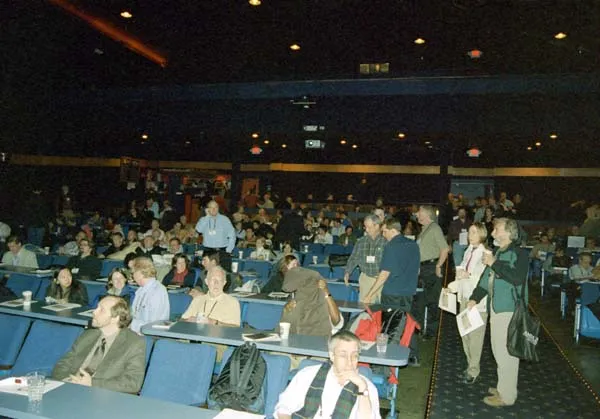
Photo: LDGE at English Wikipedia, Leo Enticknap (this is a link to my personal site for information purposes only, the copyright warning on which does not apply to this image), Public domain, via Wikimedia Commons
There is a particular kind of conversation that happens in a cinema foyer after the credits have rolled and the lights have come up. Someone is still holding their coat. Someone else is trying to remember the name of a shot. A third person says, quite casually, that they saw their first Ousmane Sembène film in Cambridge and have been chasing that feeling ever since. These exchanges are easy to miss. They are also, in their own way, a record of African cinema in the UK.
At Cambridge African Film Festival, we tend to think of the programme as the thing we make. The audience is the thing that makes it matter. But audiences also hold something else: memory. A first encounter with Black Girl. A late-night screening of Touki Bouki that rearranged someone’s sense of what cinema could do. A Q&A where a filmmaker said something that stayed with a viewer for years. These are not just nice anecdotes. They are fragments of a history that rarely makes it into official records.
The queue after the credits
Most film history is built from things that can be filed: prints, posters, contracts, reviews, festival catalogues. Those things matter. But they tell us very little about what it felt like to sit in a room in Cambridge and watch a film with other people. They do not tell us which scenes caused a sharp intake of breath, which jokes landed differently in a UK screening room, or which filmmaker’s answer to a question changed someone’s mind about their own work.
Audience memory fills that gap. It is informal, partial and occasionally unreliable — which is exactly what makes it interesting. A recollection does not have to be perfectly accurate to be useful. It has to be specific. The person who remembers queuing in the rain for a screening at the Arts Picturehouse is preserving something about access, appetite and the sheer effort of showing up. The person who remembers bringing their mother to a Saturday afternoon film is preserving something about who African cinema in Cambridge is for.
A different kind of collection
When we talk about archiving cinema, we usually mean preservation: restoring a negative, digitising a tape, cataloguing a director’s papers. That work is essential, and it is often urgent. But there is another kind of collecting that happens in conversations, in notebooks, in the margins of programmes and in the memory of regular attendees. It is a living archive, and it is already here.
It is also at risk. Memories fade. People move away. A festival audience changes shape from year to year. The student who discovered African cinema at a Cambridge screening in the 2000s may now have a completely different relationship to films, and no obvious reason to write any of it down. If we do not ask, we will not know. And if we do not know, the story of African cinema in this city will be thinner than it should be.
This is not about turning every audience member into a research subject. It is about recognising that a festival is not only a series of screenings. It is a social event with a memory. The people in the room are part of the film’s afterlife.
What gets lost when we don’t ask
There is a tendency in UK film culture to measure success in numbers: ticket sales, audience figures, press coverage, funding targets. Those things are necessary, but they cannot capture the quiet, stubborn ways that cinema changes people. They cannot record the viewer who came to one screening and then started reading around the subject. They cannot record the teacher who left with an idea for a lesson. They cannot record the person who realised, for the first time, that the films they loved were part of a much wider world.
African cinema in the UK has a long history of being shown in small rooms, community centres, university lecture theatres and festival sidebars. Cambridge is part of that history. So are the people who kept coming back. If we only preserve the films and not the responses to them, we lose the texture of reception: the arguments, the enthusiasms, the moments of confusion, the sudden recognitions.
Start in the foyer, not the boardroom
Recording audience memories does not need to be complicated. It could begin with a table in the foyer, a stack of index cards and a simple prompt: What is the first African film you remember seeing, and where were you? It could be a short audio booth where people leave a one-minute recollection. It could be a QR code on the back of a programme that leads to a simple form. It could be a partnership with a local library or community group to host a listening session.
The important thing is consent, care and a bit of structure. People should know how their words will be used. They should be able to remain anonymous if they prefer. The project should not only collect stories from the most confident speakers or the most longstanding attendees. It should make room for the person who came alone, the person who is not sure they count as an audience member, the person who remembers a film differently from everyone else.
There is also a practical side. A small volunteer team could transcribe short recordings. A local historian or archivist could advise on storage and access. A future festival edition could share some of the memories back with audiences, perhaps as a listening post in the foyer or a short printed booklet. The point is not to build a museum shelf. The point is to keep the conversation going.
A living record, not a locked drawer
An audience memory project would not replace proper film preservation. It would sit alongside it, reminding us that films do not only exist on screens. They exist in the people who saw them, argued about them, recommended them and carried them home.
Cambridge African Film Festival has always been a meeting point: for films, for filmmakers and for audiences who want to see African stories on screen. The memories in that room are part of the festival’s identity. They are also part of a wider UK history of African cinema that is still being written, often in the margins.
So the next time the lights come up and someone starts telling a story in the aisle, it is worth listening. Better still, it is worth recording. The audience is not separate from the archive. In many ways, the audience is the archive — and it is waiting to be asked.