Frames in Motion: Giving African Animation a Cambridge Weekend
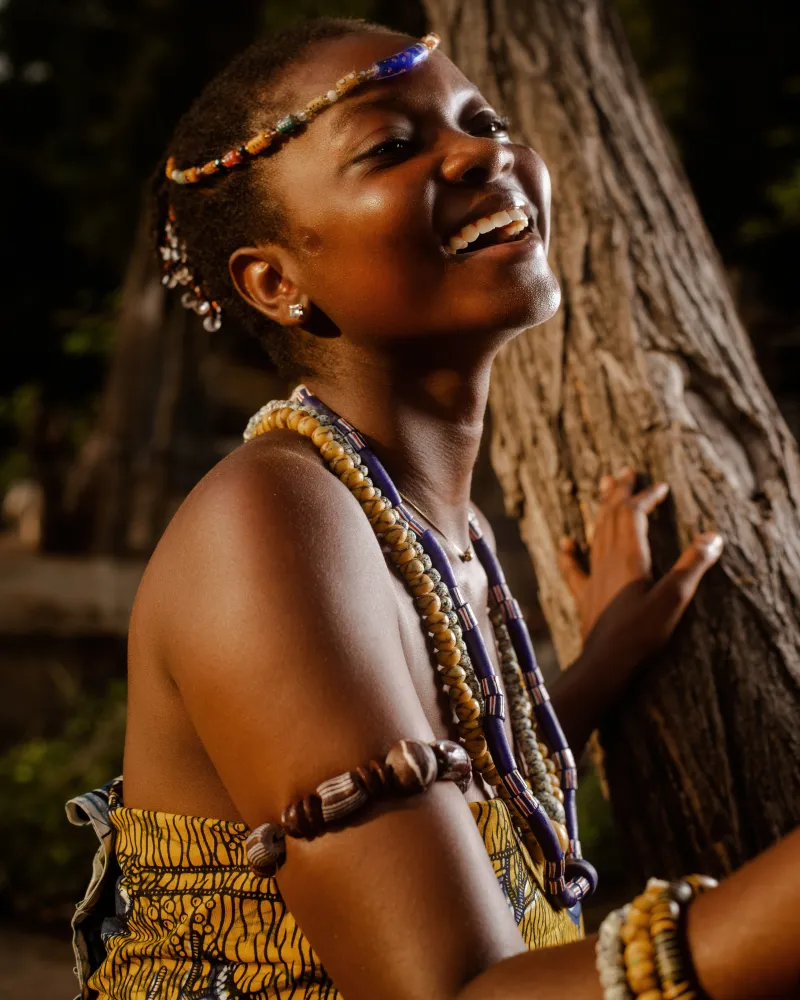
Photo: African animator drawing storyboard at desk in animation studio, via images.pexels.com
Cambridge has a healthy appetite for African cinema as a big-screen event. We turn out for features, we stay for Q&As, and we have spent plenty of recent column inches arguing that this work belongs in the main listings rather than a niche sidebar. But there is one part of the continent’s moving image that keeps slipping through the net: animation.
Not because there is nothing to show. Not because audiences would not come. Mostly because UK festival programming still treats animation as either a children’s add-on or a technical curiosity, and African animation as a smaller subset of both. That is a mistake, and it is one Cambridge is unusually well placed to correct.
The strand that keeps slipping through
Look at a typical UK festival line-up with an African focus and you will usually find documentary, arthouse drama and maybe a genre title or two. Animation appears less often, and when it does it tends to arrive as a single short before a feature rather than a programme in its own right. That is a distribution habit as much as a curatorial one. Animated work from the continent is often made by small studios, shown at specialist festivals, and then lost in the gap between online platforms and cinema bookings.
Cambridge can make a different choice. We already have the ingredients: a festival identity built around African stories, compact venues that make a weekend programme feel like an event rather than a sprawl, and an audience used to crossing the city for a good screening. What we do not yet have is a dedicated animation strand. A pilot weekend in 2026 would be a practical way to test the idea without pretending it has to be a permanent fixture from day one.
A shortlist, not a monolith
African animation is not a single style, market or audience. It runs from hand-drawn shorts to stop-motion experiments, from preschool series to futuristic 3D worlds. Any Cambridge programme should resist the temptation to present it as one tidy package.
A few titles show the range. The Legend of the Sky Kingdom, a Zimbabwean feature from 2003, is often cited as the country’s first animated feature and has the handmade, slightly wonky charm of a film made by people who refused to wait for a bigger industry to arrive. Aya of Yop City, the 2013 feature based on Marguerite Abouet’s graphic novels, is brighter and more urban, a witty ensemble piece set in Côte d’Ivoire that would sit happily in an evening slot. Kizazi Moto: Generation Fire, the 2023 anthology of African sci-fi shorts, is a useful showcase for style and ambition, while Iwájú, the Lagos-set series made with Kugali and Walt Disney Animation Studios, shows what happens when African creators get a bigger production canvas. For younger audiences, Supa Team 4 and Bino and Fino offer a way in that does not treat children as a side market.
That mix matters. A weekend built only on glossy recent series would miss the scrappy history. A weekend built only on worthy shorts would miss the pleasure. The point is not to define African animation once and for all, but to show enough of it that Cambridge audiences start to recognise the range.
Why it travels — and why that is not the whole story
Animation has an obvious practical advantage for a festival: it crosses language barriers more easily than live action. A child in Cambridge and a child in Lagos can follow the same visual joke without subtitles doing all the work. That makes it a natural fit for school screenings, family matinees and mixed-language programmes.
But there is a risk in leaning too hard on the idea that animation is universal. It is not frictionless, and it should not be treated as a bland global product. The specific visual references, the cadence of the storytelling, the music, the city streets and the humour all matter. Subtitles and introductions still do a job. The aim is not to flatten African animation into something that asks nothing of the audience, but to make the invitation easier to accept.
It also travels across generations in a way that much festival programming does not. A Saturday morning screening can bring in families and school groups; an evening session can pull in students and regular cinema-goers; a workshop can reach people who want to know how the frames are actually made. Animation is a craft you can watch and then try, which makes it a good festival subject rather than just a programme category.
A workable 2026 weekend
The simplest version is a Friday-to-Sunday pilot in early December 2026, shared between a cinema screen and a workshop room. Friday evening could open with a shorts showcase drawn from Kizazi Moto and independent work, followed by a conversation with an animator or programmer. Saturday morning would be the school and family slot: a Supa Team 4 or Bino and Fino screening with a short making-of introduction, priced so that local schools can bring a group without a lengthy funding application. Saturday afternoon would be the workshop, ideally at Cambridge Junction or Anglia Ruskin’s Cambridge School of Art, with storyboarding, character design and a basic stop-motion exercise. Saturday evening could then shift gears with Aya of Yop City or a curated feature programme.
Sunday would be the quieter, broader day: a matinee of The Legend of the Sky Kingdom with an introduction that places it in context, then a closing panel on distribution, funding and why animation from the continent still struggles to reach UK screens. None of this needs to be expensive or over-produced. The point is to make the weekend feel deliberate: school screening, evening show, workshop, repeat.
What would make it stick
A single animation weekend will not fix the wider programming gap, and it should not be sold as if it will. What it can do is create a local audience and a local argument. If the Friday shorts session sells out and the Saturday workshop has a waiting list, that is evidence for a second edition. If schools ask to come back, that is evidence for a schools programme. If local animators turn up and want to show work, that is evidence for a Cambridge-made strand rather than a one-off import.
The Cambridge African Film Festival already makes the case that African stories belong on screen here. Animation is part of that story, not a footnote to it. Giving it a weekend of its own in 2026 would be a small, practical way to stop it slipping through the net.