Front of House, Back of Mind: The Volunteers Who Keep African Cinema Moving in Cambridge
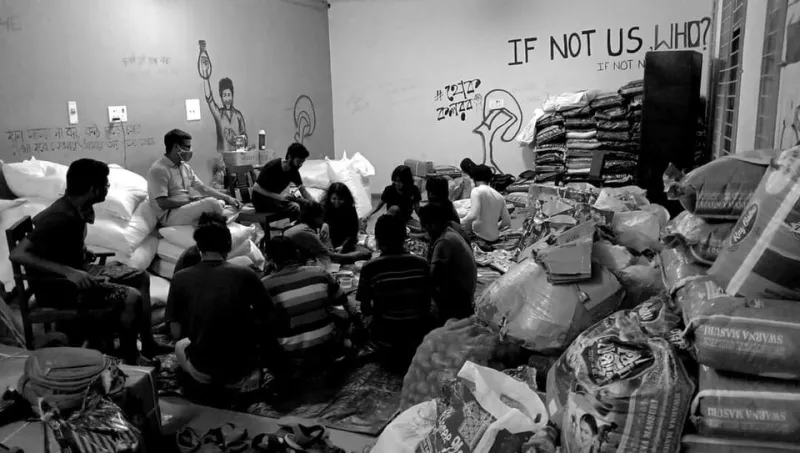
Photo: Arijit Shaw, CC BY-SA 4.0, via Wikimedia Commons
There is a moment, just before a screening, when the cinema feels like it is holding its breath. The seats are mostly full. The trailers have finished. Someone is still trying to find their ticket on their phone. And then the doors close, the lights dim, and the film takes over. What is easy to miss is how many people worked to make that moment feel effortless.
At the Cambridge African Film Festival, volunteers are part of that machinery. They are the first face at the box office, the person checking a subtitle file has loaded, the runner carrying a microphone to the front for a Q&A, and the calm voice helping a latecomer find a seat without tripping over anyone in the dark. Their work is practical, but it is also cultural. A festival does not become welcoming just because it says it is. It becomes welcoming because people build the welcome, shift by shift.
The first face you see
Long before a film starts, the box office is already busy. Volunteers are checking bookings, issuing tickets, answering questions about running times, accessibility, and whether there is anything to eat nearby. In Cambridge, that often means giving directions to a venue, explaining where the accessible entrance is, or reassuring someone who has never been to a festival screening before that they are in the right place.
It sounds simple. It rarely is. A box office volunteer has to hold a lot of information at once: the programme, the venue layout, the ticket types, the quiet spaces, the content notes, the fact that the 18:30 screening is nearly full but the 20:45 still has seats. They also have to do it quickly, because the queue is moving and the film will not wait. The best volunteers make that pressure look like conversation. That is a skill, not an accident.
The jobs you do not see on the poster
A festival programme lists films, guests, and times. It does not list the volunteer who arrives early to check the projector has the right aspect ratio, or the one who sits with a laptop making sure the subtitle track is in sync. It does not list the person who walks a filmmaker from the station to the venue, or the one who stands at the door of the green room making sure nobody wanders in looking for the toilets.
Those roles matter because African cinema often arrives in the UK with more technical and contextual care needed than the average release. Prints and digital files travel. Subtitles need checking. A Q&A might need a microphone runner, a timekeeper, and someone who can step in if a guest is delayed. Volunteers are often the flexible layer that absorbs those surprises. They are not just helping out. They are part of how the film actually reaches the audience.
Why they sign up
Ask volunteers why they started and the answers tend to cluster around a few things. Some are film fans who want to see more African work on a big screen and realise that wanting it is not enough. Some are students or early-career workers building experience in events, programming, or communications. Some are neighbours and regulars who came to a screening, liked the atmosphere, and asked how they could help. Some are from African diasporic communities in the UK and want to see their stories handled with care, not curiosity.
What they share is a willingness to be useful. Volunteering at a festival is not a vague gesture towards culture. It is showing up on a cold Cambridge evening, learning the rota, and doing the small tasks that let everyone else have a good night. That is a particular kind of commitment, and it is worth naming.
The skills that stay with you
A volunteer shift can look good on a CV, but the real gains are more specific. Box office work builds confidence and clear communication. Ushering builds spatial awareness and the ability to manage a room without being bossy. Projection support builds technical patience. Q&A running builds the ability to think on your feet when a guest goes off-script and the clock is ticking.
There is also the quieter skill of cross-cultural hospitality. African cinema attracts audiences who may be seeing a particular language, region, or film tradition for the first time. Volunteers learn how to answer questions without making anyone feel foolish, and how to hold space for disagreement after a film without letting a conversation turn into a lecture. Those are useful skills in any workplace, and in any city.
A welcome is a craft
Good hosting is not just friendliness. It is preparation. It is knowing where the accessible seating is, how the hearing loop works, and whether there is a quiet space for anyone who needs a break. It is briefing volunteers on content notes and making sure they know who to ask if something goes wrong. It is also remembering that the person at the door might be nervous, especially if they are new to the festival or new to Cambridge.
At its best, the volunteer crew becomes a kind of front-of-house ensemble. They share information, cover for each other, and keep the tone calm when the queue is long or the start time slips. That atmosphere is not a small thing. It is part of the reason people come back. A festival that feels held together by people who want to be there is a festival that feels different from one held together by signage alone.
The sustainability question
There is a harder conversation underneath all this. Volunteering is vital, but it cannot be an excuse for under-resourcing. Festivals need clear rotas, expenses policies, safeguarding, and proper thanks. Volunteers should not be asked to absorb every gap, and they should not be treated as free labour that can be stretched indefinitely. The most sustainable volunteer culture is one where people are supported to give what they can, and where their contribution is recognised as part of the festival's infrastructure, not a nice extra.
That matters for African cinema in Cambridge specifically. If the aim is to make these films a regular part of the city's cultural life, then the people who make the screenings happen need to be able to keep showing up. Burnout is not a badge of honour. A well-run volunteer programme is a sign of a festival that plans to be around for a while.
What the room feels like
When the lights come up and the audience starts talking, the volunteers are often already moving: collecting feedback, clearing the foyer, resetting for the next screening. But they are also part of the audience. Many of them watch the films. Many of them stay for the conversations. Over a festival, the crew and the crowd start to overlap. That is the point. Volunteering is not a wall between the festival and its audience. It is one of the ways the audience becomes a community.
So next time you are in a Cambridge cinema and someone checks your ticket, points you towards a seat, or hands you a programme with a smile, take a second look. They are not just helping out. They are helping to build the conditions in which African stories can be seen, discussed, and remembered in this city. That work deserves more than a round of applause. It deserves a rota that respects it, and an audience that knows it is there.
How to get involved
If you are interested in volunteering with the Cambridge African Film Festival, keep an eye on the festival website and mailing list for 2026 opportunities. Roles range from box office and ushering to social media, transcription, guest support, and event setup. You do not need to be a film expert. You need to be reliable, curious, and willing to learn. The rest can be taught.